

When tooth pain lingers well beyond a meal, or a dull ache becomes something sharper, it is easy to wonder whether something more serious is happening beneath the surface. For many people, that concern eventually leads to a conversation about root canal treatment, a procedure that is widely misunderstood but often the most effective way to address a deep tooth infection.
Understanding how root canal treatment works, why it may be recommended, and what to expect during recovery can make that conversation with your dentist far easier to navigate.
Quick Overview
- A dental procedure that removes infected or damaged pulp from inside a tooth and seals the space with filling material
- May apply to people with a deeply infected tooth, severe decay reaching the pulp, or tooth damage from trauma, though a clinical assessment is always needed first
- Involves cleaning the root canal system, sealing it with a material called gutta-percha, and often placing a crown to restore the treated tooth
- Outcomes are influenced by the extent of infection, the number of canals in the tooth, the surrounding bone and gum condition, and the type of restoration placed afterwards
Below, we explain how the procedure works, what causes it to be needed, and what recovery typically looks like.
What Does Root Canal Treatment Actually Involve?
Root canal treatment is a dental procedure that removes the soft tissue called pulp from inside a tooth. The pulp sits in the centre of the tooth and contains nerves, blood vessels, and connective tissue. When bacteria reach and infect this tissue, the entire canal system needs to be cleaned and disinfected to stop the infection from spreading.
The procedure generally follows these steps: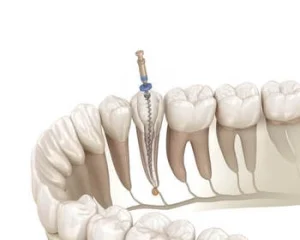
- A local anaesthetic numbs the area before any work begins
- A small hole is made in the top of the tooth to access the pulp chamber
- The infected pulp is carefully removed using fine instruments
- Each canal is cleaned, shaped, and disinfected
- The canals are filled with gutta-percha, a biocompatible filling material, then sealed
- A crown or filling is placed to restore the tooth’s structure and function
The number of appointments required depends on the complexity of the case. A single-canal tooth may be completed in one visit, while a molar with several canals, or a tooth with significant infection, may require more than one visit.
What Causes a Tooth to Need Root Canal Treatment?
Several conditions can damage the pulp to the point where treatment is needed. The most common include:
- Tooth decay: When decay reaches deep into the tooth without being treated, bacteria can enter the pulp
- Trauma: A knock or injury can damage pulp tissue even when no crack is visible
- A cracked tooth: Fractures that extend into the pulp create a direct pathway for bacteria
- A failed filling or crown: Old restorations that no longer seal properly can allow bacteria to re-enter
Not all of these situations will automatically require root canal treatment. A thorough clinical examination, including X-rays, is needed to assess the extent of any damage.
What Are the Signs That Root Canal Treatment May Be Needed?
Some people experience clear symptoms, while others have little to no discomfort despite significant internal infection. Common signs include: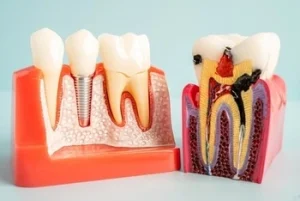
- Persistent or throbbing pain, particularly when biting down
- Sensitivity to heat or cold that lingers after the source is removed
- Swelling in the gums near the affected tooth
- A small pimple-like bump on the gum, which may indicate pus
- Discolouration of the tooth compared to the surrounding teeth
It is worth noting that tooth pulp can sometimes become damaged without causing obvious symptoms, which is why regular dental check-ups play an important role in detecting problems early.
A Considered Approach to Root Canal Treatment
Root canal treatment is a well-established way to address a tooth infection and preserve the natural tooth where possible. The right path forward depends on a proper assessment, including X-rays and a clinical examination.
If you are experiencing tooth pain, persistent sensitivity, or swelling, a clinical assessment is the first step. At Red Hill Dental, Dr Henry Ho, Dr Tiffany Chan, and Dr Ying Hu take time to explain their findings and discuss options in a clear, unhurried way.
To book an assessment, get in touch with our team or call (07) 3368 3555.
Frequently Asked Questions
How many visits does a root canal procedure take?
The number of visits depends on the complexity of the case. A tooth with a single canal and limited infection may be completed in one appointment. More complex cases, involving multiple canals or a significant infection, may require more than one visit to allow adequate healing between stages.
Is root canal treatment painful?
The area is numbed with local anaesthetic before the procedure begins, so most people experience minimal discomfort during treatment itself. Some tenderness in the days following is common and generally settles within a short period. The level of discomfort varies between individuals.
Note: Any surgical or invasive procedure carries risks. Before proceeding, you should seek a second opinion from an appropriately qualified health practitioner.
References
Better Health Channel. (n.d.). ‘Root Canal Treatment’. Better Health Channel. Melbourne, VIC: Victorian Department of Health. https://www.betterhealth.vic.gov.au/health/conditionsandtreatments/root-canal-treatment
Healthdirect Australia. (n.d.). ‘Root Canal Treatment’. Healthdirect Australia. Canberra, ACT: Australian Government. https://www.healthdirect.gov.au/root-canal-treatment