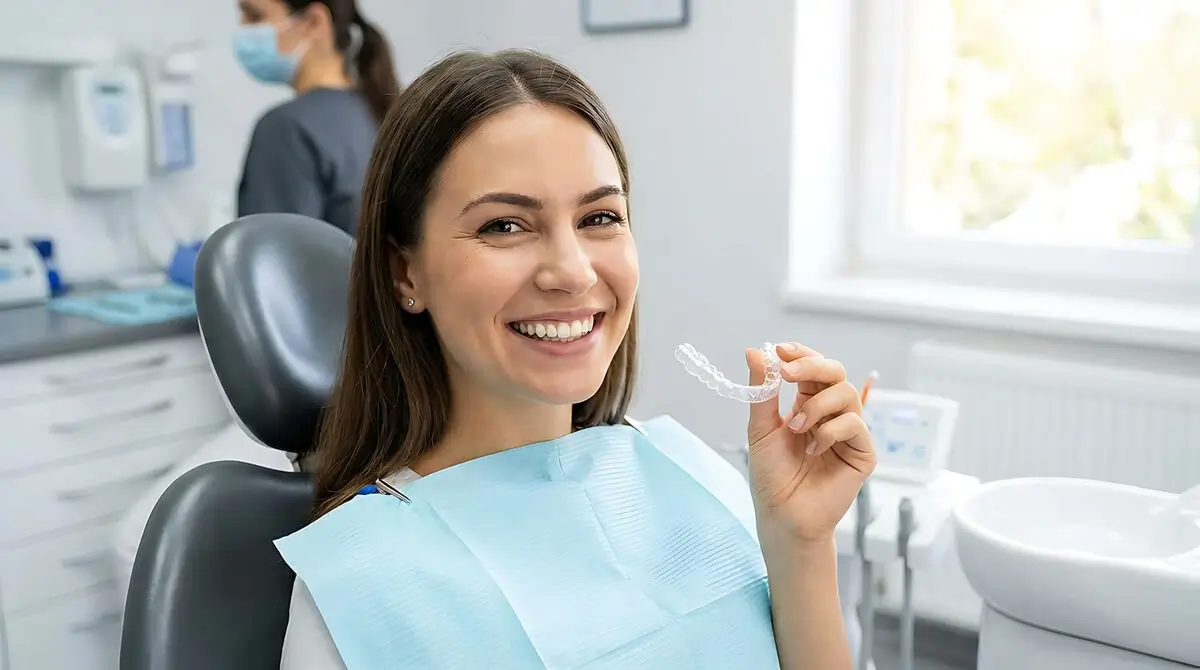
Teeth straightening has become more accessible than it used to be, and clear aligners sit at the centre of that shift. More Australians are exploring them as an alternative to traditional metal braces, and the range of options, price points, and providers has never been wider.
At Red Hill Dental in Paddington, Dr Henry Ho and the team offer clear aligner treatment using digital scanning and personalised treatment planning, making the process clear and considered from the first visit.
Quick Overview
- Affordable clear aligners are custom-made transparent trays used to gradually move teeth into improved alignment, though what counts as affordable can vary widely depending on the provider, brand, and case complexity.
- They may suit people with mild to moderate alignment concerns, though not everyone is a suitable candidate, and a clinical assessment is needed to determine what approach is appropriate.
- The process typically involves a series of trays worn in sequence, each moving the teeth incrementally, but the duration of treatment and the number of aligners needed vary from person to person.
- Cost is influenced by multiple factors, including the complexity of the case, the level of clinical supervision involved, and whether the quoted price includes retainers, refinements, and follow-up care.
- What makes one option genuinely affordable over another is not always obvious from the advertised price alone.
Below, we explain how clear aligners work, what drives the cost difference between options, and what to look for when comparing providers.
How Clear Aligners Work
 Clear aligners are a series of custom-made, transparent plastic trays designed to gradually reposition the teeth. Each tray is worn for a set period before the next tray in the sequence is introduced, applying gentle, consistent pressure to move the teeth incrementally toward their target position.
According to Healthdirect Australia, clear aligners need to be worn consistently, except when eating and drinking, to be effective. They are an alternative to traditional braces rather than a universally superior option, and whether they suit a particular case depends on the nature and degree of the alignment concern.
Most clear aligner systems require a wearing schedule of 20 to 22 hours per day. Compliance with this is one of the most significant factors influencing how predictably the treatment progresses.
Clear Aligners vs Traditional Braces: What Is the Difference?
Both clear aligners and traditional braces move teeth using sustained pressure. The difference lies in how that pressure is applied and the experience of wearing them day to day.
Traditional metal braces use brackets bonded to the teeth and connected by a wire, which is periodically adjusted by the dentist. They are fixed in place and cannot be removed by the patient. Clear aligners are removable and far less visible when worn, which many patients find suits their lifestyle and daily routine.
The Better Health Channel explains that clear aligners, also known as invisible braces, are a series of custom-moulded plastic trays that sit over the teeth and move them gradually. Traditional braces use a wire and bracket system where the constant gentle pressure of the wire moves the teeth over time.
For mild to moderate crowding, spacing, and some bite concerns, clear aligners can deliver outcomes comparable to fixed appliances. For more complex cases, including significant bite correction or severe crowding, traditional braces may still be the more appropriate clinical choice. This determination depends on the individual assessment.
What Drives the Cost of Clear Aligners in Australia?
The cost of clear aligner treatment in Australia varies considerably, and the difference between providers, brands, and treatment complexity can be significant. Several factors influence where a particular case sits within that range.
Case complexity is the primary driver. A case involving minor spacing correction requires fewer aligners and a shorter treatment period than one addressing significant crowding or bite issues. More complex cases typically involve more trays, more clinical time, and more refinements along the way.
What is included in the quoted fee matters significantly. A quote that includes consultation, digital scanning, all aligners, refinements if needed, and retainers represents a different value from one that covers aligners only. Before committing, it is worth asking specifically what the quoted price covers and what would attract additional cost.
Brand and supervision level also influence cost. Different aligner systems involve different levels of clinical involvement, materials, and digital planning tools, and these differences are reflected in how fees are structured.
Private health insurance may offset part of the cost for patients with orthodontic extras cover. Annual and lifetime limits apply, and waiting periods are common. Checking what your fund covers before starting treatment can help you understand the out-of-pocket cost more accurately.
The Case for In-Clinic Supervision
One of the most important distinctions when comparing clear aligner options is the level of clinical oversight involved.
 Direct-to-consumer aligner companies reduce costs partly by minimising or removing in-person care. Patients complete home impressions, receive aligners by mail, and track progress through an app. This model has attracted attention from dental regulators in Australia.
In-clinic treatment typically involves a detailed initial assessment, including digital scans and X-rays if needed, to plan each stage of treatment accurately. This also allows the treating dentist to identify any underlying concerns, such as gum health issues or bone considerations, before aligners begin. Follow-up appointments allow progress to be monitored and adjustments made where needed. A systematic review found that the effectiveness of clear aligners varies depending on case selection and clinical planning, which underscores the value of thorough in-person oversight throughout treatment. At-home aligners are a newer concept in dentistry that has many in the profession concerned, given that poorly done treatment can damage teeth and gums.
At Red Hill Dental, treatment planning uses digital 3D scanning and CAD/CAM technology to design each stage of the aligner sequence with precision before treatment begins.
What Does Affordable Actually Mean?
The word “affordable” is used broadly in clear aligner marketing, and it is worth thinking critically about what it means in practice.
A lower upfront price does not necessarily represent better value if it excludes retainers, limits refinements, or provides minimal clinical oversight. A higher initial quote that includes everything, from the initial scan through to post-treatment retainers and follow-up care, may work out more economical overall.
Payment plans can also shift how affordable a treatment feels in practice. Red Hill Dental offers flexible payment options, including Afterpay, allowing the cost of treatment to be spread across manageable instalments. Understanding the total repayment amount, including any applicable fees, is important before committing to a finance arrangement.
Prices and supervision all vary between clear aligner brands and options, and choosing the right provider depends on individual clinical needs as well as personal priorities.
A Considered Approach to Clear Aligners in Paddington
Teeth straightening is a personal decision, and the most suitable option varies from person to person. A provider’s price point tells only part of the story, and a thorough clinical assessment is the appropriate way to understand what approach is right for your situation.
At Red Hill Dental, Dr Henry Ho takes time at the initial consultation to assess alignment, discuss your goals, and explain what clear aligner treatment could involve for your specific situation. There is no obligation at a first visit, and the team will outline all relevant costs clearly before any treatment begins.
To book your consultation, visit the practice at 1A/251 Given Terrace, Paddington, or book your consultation online. You can also call (07) 3368 3555.
Frequently Asked Questions
Are affordable clear aligners as effective as more expensive options?
The effectiveness of clear aligners depends more on the quality of treatment planning, the suitability of the case, and how consistently the aligners are worn than on price alone. Some lower-cost options involve less clinical supervision, which can affect outcomes in cases that require careful monitoring. A thorough initial assessment from a qualified dentist can help you understand whether a particular option is appropriate for your situation.
 How long does clear aligner treatment take?
Treatment duration varies depending on the complexity of the case and how consistently the aligners are worn. Minor spacing or crowding cases may take as little as six to twelve months. More involved alignment concerns typically take twelve to eighteen months or longer. Your dentist will give you a clearer estimate after assessing your teeth and designing a treatment plan.
Can I use private health insurance to offset the cost of clear aligners?
Many private health funds with orthodontic extras provide partial rebates for clear aligner treatment. Annual and lifetime limits apply, and waiting periods are common. It is worth checking your policy before starting treatment to understand what portion of the cost your fund may cover.
What is the difference between clear aligners and Invisalign?
Invisalign is a brand of clear aligner, and one of the most widely recognised in Australia. Other brands of clear aligners are also available through dental clinics. All work on the same principle of using custom-made transparent trays to move teeth gradually. The differences between brands relate to the materials used, the digital planning software, and the clinical protocols involved. Your dentist can advise on which system may suit your case.
What happens after clear aligner treatment ends?
Once the active treatment phase is complete, retainers are used to hold the teeth in their new positions. Teeth have a natural tendency to move back toward their original positions over time, and wearing retainers as advised by your dentist is what maintains the result of the treatment long-term.
References
Healthdirect Australia. (2024). ‘Dental Braces and Retainers’. Healthdirect, updated 2024. Canberra, ACT: Australian Government Department of Health. https://www.healthdirect.gov.au/dental-braces-and-retainers
Better Health Channel. (n.d.). ‘Orthodontic Treatment’. Better Health Channel. Melbourne, VIC: Victorian Government Department of Health. https://www.betterhealth.vic.gov.au/health/conditionsandtreatments/orthodontic-treatment
Jaber, S.T., Hajeer, M.Y. and Sultan, K. (2023). ‘Treatment Effectiveness of Clear Aligners in Correcting Complicated and Severe Malocclusion Cases Compared to Fixed Orthodontic Appliances: A Systematic Review’. Cureus, 29 April. Palo Alto, CA: Cureus Inc. https://pubmed.ncbi.nlm.nih.gov/37128600/
Colgate Oral Health Centre. (2024). ‘Clear Aligners or Metal Braces? Here’s How To Choose’. Colgate, December. New York, NY: Colgate-Palmolive Company. https://www.colgate.com/en-us/oral-health/adult-orthodontics/clear-aligners-or-metal-braces-heres-how-to-choose
Healthline Editorial Team. (2024). ‘Best Invisible Braces’. Healthline, updated 2024. San Francisco, CA: Healthline Media. https://www.healthline.com/health/best-invisible-braces